

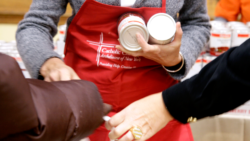





“Food is a necessity, not a luxury,” said Lakisha Morris, Director of Food and Housing Stability at Catholic Charities Community Services. It’s a powerful reminder she shares frequently when describing the mission of Catholic Charities of New York.
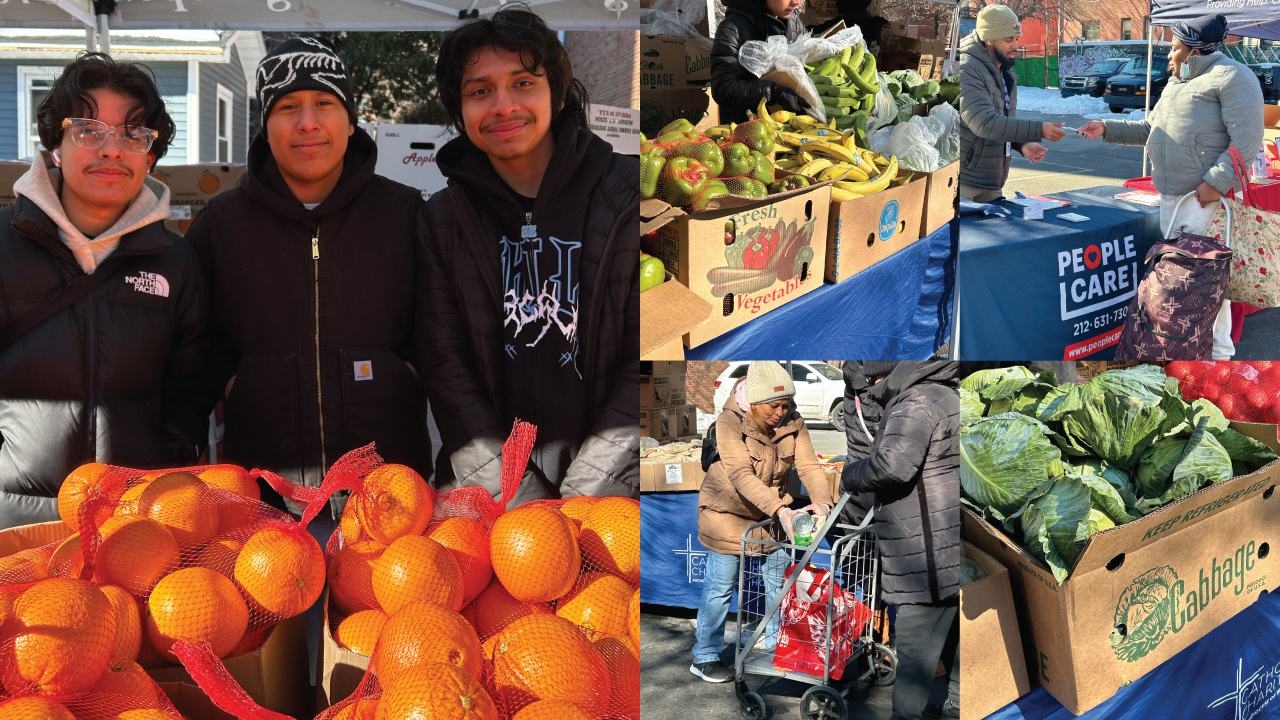
Each month, Catholic Charities’ Lt. Joseph P. Kennedy Jr. Community Center in Harlem hosted a nutrition class in partnership with the Food Bank for New York City. This program did more than just provide access to fresh fruits and vegetables. It empowers participants to turn these ingredients into healthy, nutritious meals that support long-term wellness.
Empowering Communities Through Nutrition Education
At Catholic Charities, our mission is to provide help and create hope for our neighbors in need. Every year, we distribute millions of meals to hungry New Yorkers through a network of soup kitchens, community food pantries, pop-up events, and special meal deliveries. While food is essential, we know that nutrition is what truly allows people to thrive. It’s one thing to have food, but it’s the right nutrition that sustains health and well-being.
That’s where Brenna De Souza, a Community Nutritionist with Food Bank for New York City, stepped in. Each month, she brought vital nutritional education to neighborhoods across New York, helping individuals make healthier choices for longer, more fulfilling lives. “They don’t eat enough fruits and vegetables,” explained De Souza. “There’s so much processed food, which we know is high in sodium, sugar, and cholesterol, and very little nutrition. I think it’s mostly due to a lack of information.”
For vulnerable populations, she believes nutritional education is especially crucial. When participants attended these classes, they begin to make informed choices that can help control blood sugar, manage blood pressure, and reduce the risk of chronic disease. “We’ve had so many testimonies,” she says. “People went back to their doctors with better blood pressure and cholesterol levels. When the doctors asked what changed, they said, ‘I’m just eating more fruits and vegetables.”

Bridging the Gap: Access and Affordability
In a recent class, De Souza taught participants how to read nutrition labels—a skill many had never learned. She asked, “How do you choose your groceries? By brand, price, or label?” While many said they looked at labels, they didn’t fully understand what made one product “good” or “bad.” She explained how to identify key information. For instance, when it comes to sodium, 5% Daily Value or less is considered low, while 20% or more is too high. Just understanding these simple guidelines allows participants to make more informed decisions.
But knowledge alone isn’t enough. Access and affordability are key. That’s why the program also includes tips for budget-friendly meal planning, such as:
- Shopping at farmers markets
- Using SNAP benefits, which often offer bonus dollars
- Choosing store-brand items
- Cooking with seasonal produce
- Storing food properly to reduce waste
De Souza recalled a visit to a pantry where many people were discarding spaghetti squash simply because they didn’t know what it was or how to cook it. “After I showed them how to cook it, they started taking it home. It’s about breaking that barrier of the unknown,” she shared.
This partnership’s heart is about bridging the gap between access and understanding. Catholic Charities and the Food Bank for New York City work together not only to feed people but to empower them. It’s not just about providing food—it’s about providing the knowledge to use it wisely.
Catholic Charities, we care deeply about the meals New Yorkers receive. We strive to ensure our neighbors have what they need to lead well-balanced lives. By offering both nutritious food and educational resources, we’re fueling a healthier future for all of New York.
Learn more about our food programs: https://catholiccharitiesny.org/what-we-do/food/