





It is estimated that 5 to 7% of American adults are in some kind of collective reading group. With over half a million groups in the country, they have become a staple of our literary culture.
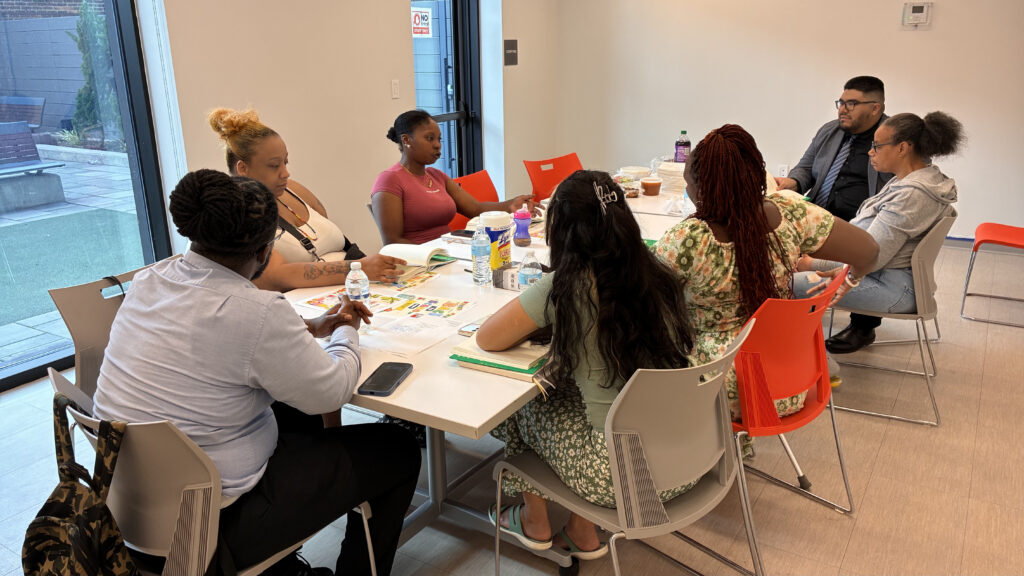
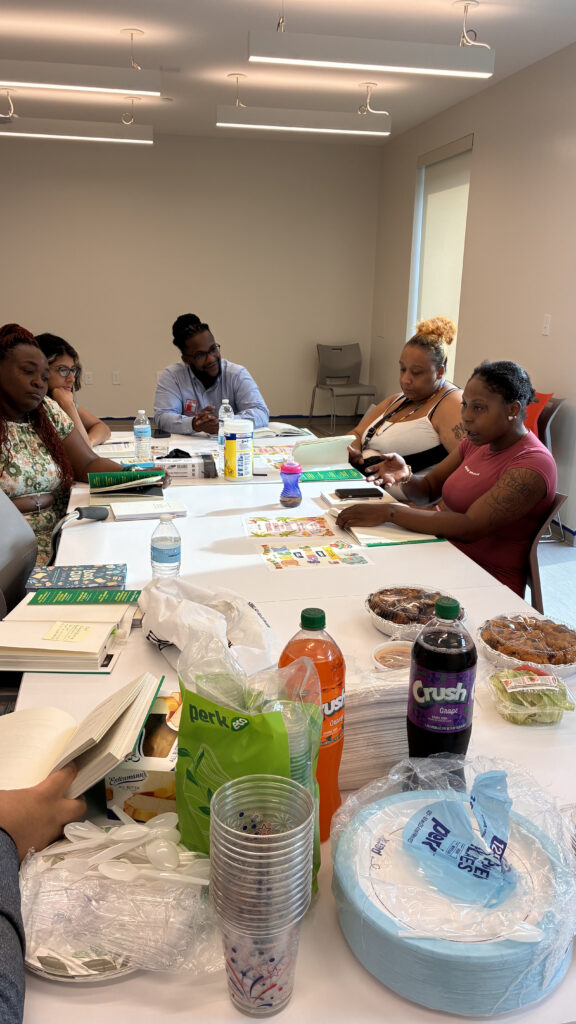
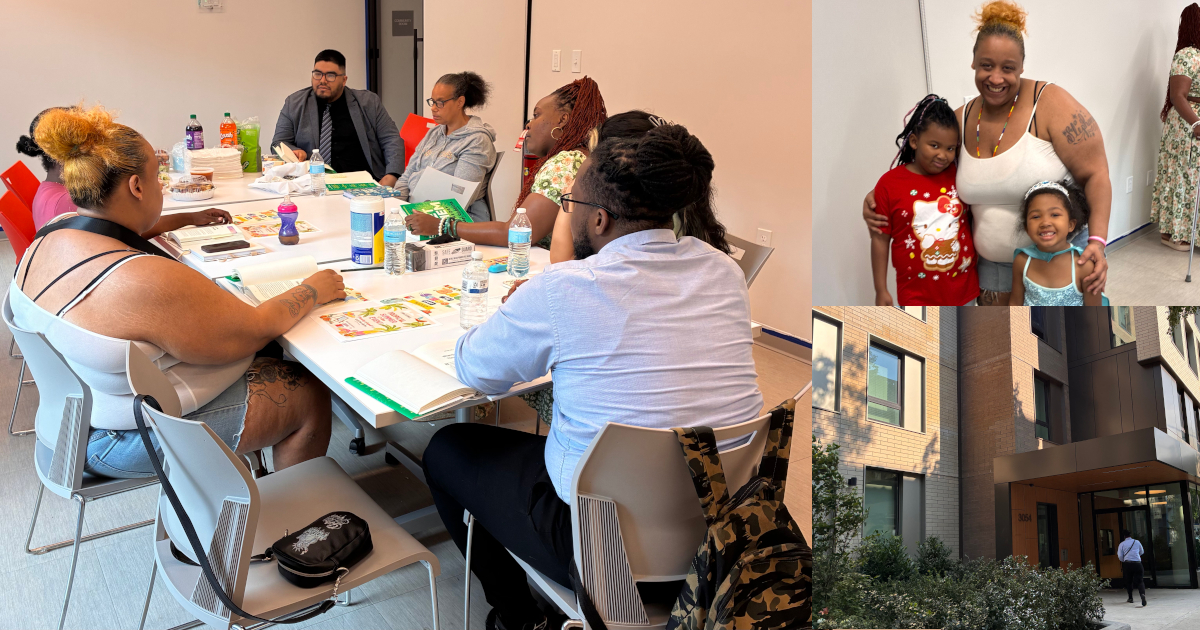
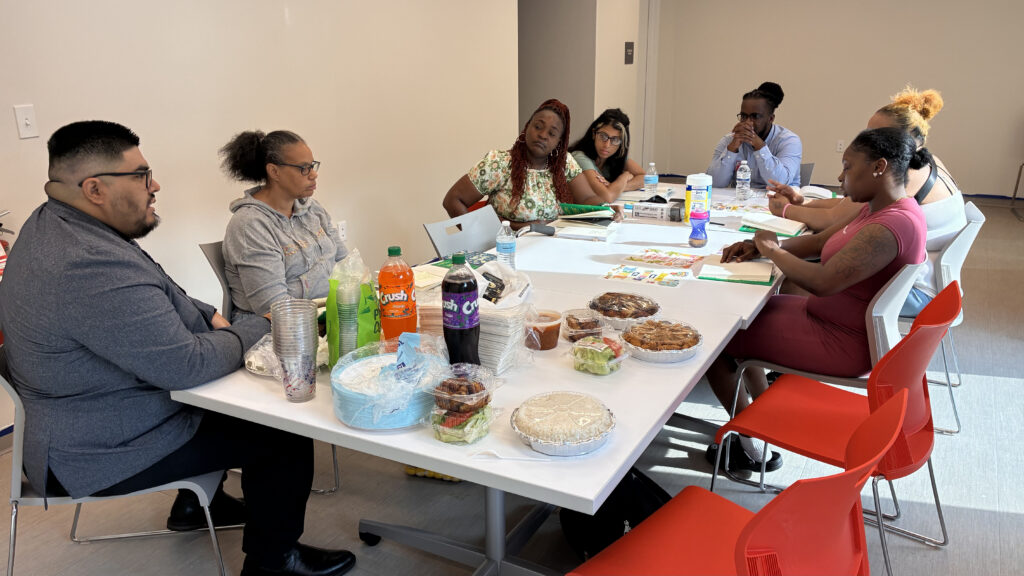
One such group is the book club that meets every Wednesday at the St. Philip Neri Apartments. At first glance, it looks like your typical reading and discussion group. But as the conversation unfolds, it becomes clear that there’s something unique about this one.
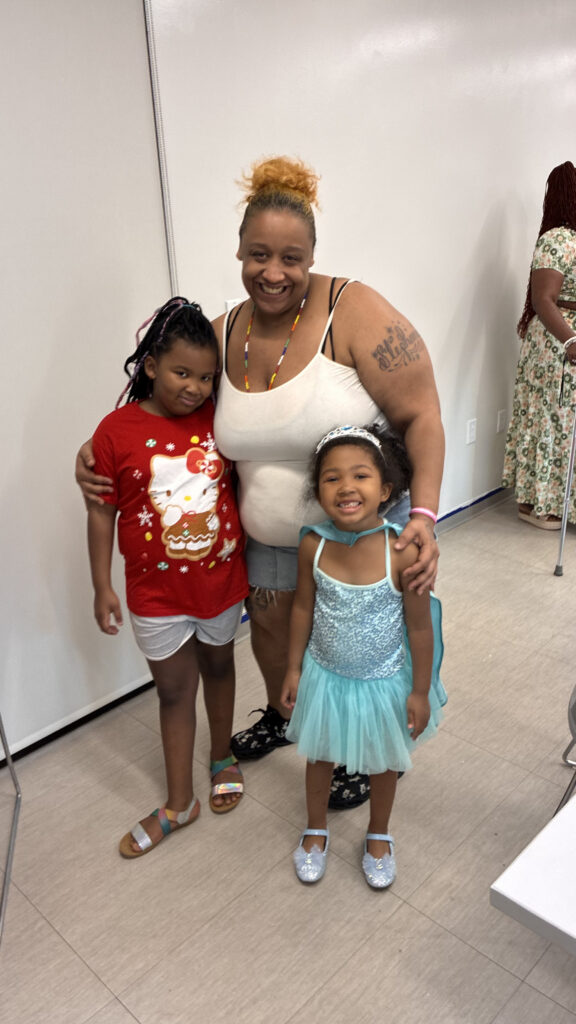
“Mentally, I’m no longer in the darkness. And it took me a long time to get out of there,” says weekly participant Stephanie, a mother who had been living in a domestic violence shelter before moving to St. Philip Neri. “I had been in an incident where someone almost cut me; and I was in survival mode for a long time. But now I can breathe. I don’t stress or have to look over my shoulder. I’ve really grown since coming here.”
Housing That Serves a Greater Purpose
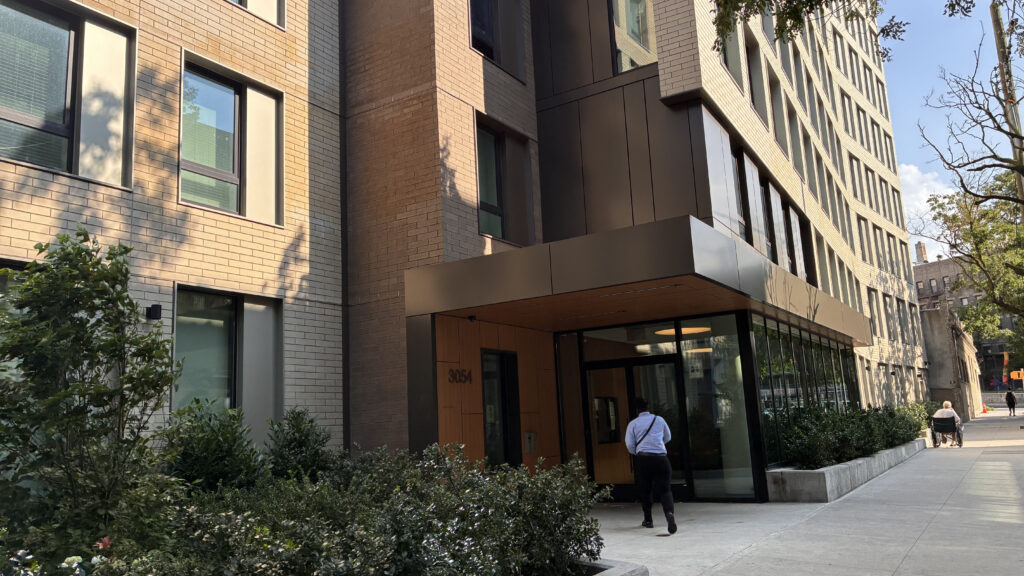
Built in 2023, the St. Philip Neri Apartments, a project of Catholic Charities of New York’s Catholic Homes agency, is a 100% affordable housing complex in the Bedford Park section of the Bronx. About half of its residents, including the book club members, are beneficiaries of supportive housing.
Supportive housing tenants are individuals with, or families where the head-of-the household has, serious mental health issues. Nearly half of them nationwide have experienced chronic homelessness. They receive wraparound, recovery-oriented services to help them maintain independence, community integration, and self-determination.
Supportive services at the St. Philip Neri Apartments are administered by Beacon of Hope, a Catholic Charities of New York program.

“We wanted to see how we could get the clients engaged, particularly the families, since we’re a family site,” says Liam Nolan, Beacon of Hope’s Field Operations Manager, recalling the book club’s beginnings in January 2026. “We wanted it to be client-driven, so we let them pick the first book, Atomic Habits.”
Nolan started the book club as part of an internship for his social work degree after conducting a needs assessment aimed at enhancing the residence’s social and rehabilitative services. He notes that the suggestion came from the book club members, whose trust in one another grew in tandem with its membership: “The members started spreading the word themselves. Eventually, more and more people started coming. People started sharing their stories and struggles, giving each other ideas, becoming more vulnerable.”
“I was in a class for people coming home from prison where we had to tell our story,” shared one participant during a book club discussion. “A lot of things happen in prison that people hold to themselves because they don’t want anyone else judging them. It just so happened that the week before finishing the class, we had finished the book Atomic Habits here in book club, and that’s what gave me the courage that I needed to share my story. It was like a shell had been cracked.”
Transformative Text
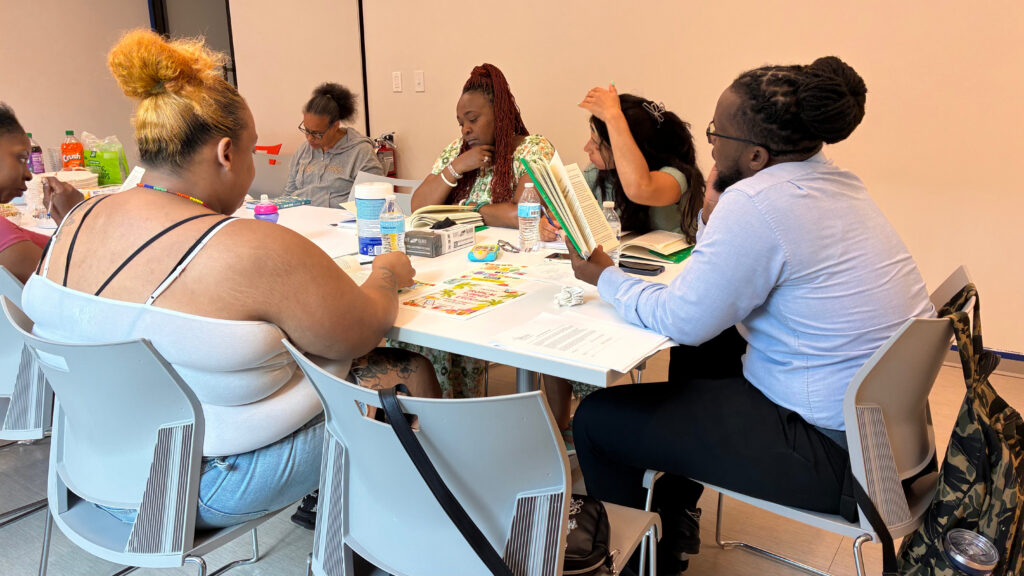
This week, the book club is reading The Let Them Theory, a motivational bestseller that focuses on reclaiming the power to control one’s own life by relinquishing control over the actions and opinions of others.
Throughout the book, author Mel Robbins delves into numerous personal experiences to illuminate its main points. She tells intimate stories from her family life, career, and social world.
Robbins’s anecdotes spark the book club members to tell their own stories. As the discussion evolves, they raise memories of living on the streets, incarceration and institutionalization, estranged families, addiction, and violence – stories of a decidedly heavier tone than Robbins’s.
Nonetheless, the book club members are heavily engaged with the text, and quickly identify the throughlines between Robbins’s tribulations and their own, pulling out valuable pearls of wisdom.
“I like how she allows herself to feel the bad,” offers one member. “She talks about the frustration of dealing with her son and the prom, feeling overwhelmed with her marriage, seeing her friends posting on social and wondering why she didn’t have their life, and everyday stress, like not wanting to get out of bed.”
“She’s talking about how being stressed out makes you exhausted,” adds another member. “She talks about the fact that you can’t control how, and then you need enough self-awareness to say, ‘You know what? Let me hold my peace because every action doesn’t deserve a reaction.’”
One member describes a recent situation where the murder of her nephew exposed a complex, and potentially damaging interpersonal dynamic. Throughout the years, she had been considered a “black sheep” in her family. Her presence at the funeral gathering could cause a row, despite her best intentions.
But upon talking with her brother and daughter, she decided on a different strategy. “I thought, ‘Let them have this moment. That’s their clique, and it’s ok for you to not be a part of that.’ My brother later told me I had made the right decision. And when I came back to reading this book, I thought, ‘You know what? I just did something!’”

Building a Community for Collective Recovery
Oscar Andino, Program Manager at St. Philip Neri Apartments, facilitates the book club, drawing out key insights and encouraging the members to discover their own. “You know, we talk about family, we talk about friendships, but some of it is your relationship with yourself,” he reminds the group, “We have to stop and say, ‘Let me not jump to conclusions or assume that other people are trying to have a negative impact on my life. I have to take the time to do something for myself.’”
Andino, who has an extensive history working in mental health, stresses the role that programs like the book club have in improving the well-being of supportive housing tenants. “There’s a lot of different pillars to health,” he explains, “We have services where medical, mental health, and substance use are addressed. But the social aspect is an incredibly important piece. Housing stability is important, but we also have to make sure that tenants can address those ADL (activities of daily living) skills.”
The movement for supportive housing started in the early 80s, after a spike in homelessness during the prior decade galvanized advocates to seek answers from the population living on the street.
Their resounding conclusion was that shelter alone was not a long-term solution for those living with chronic homelessness. Wraparound were critical for survival and achieving independence.
Since then, studies have shown that supportive housing is the most effective intervention for homelessness, with only 5% of residents returning to the shelter system. Statistically, supportive housing saves New York City $16,000 per apartment on emergency services like inpatient hospital care, and round-the-clock support staff at the residences make neighborhoods safer.
Ms. Onnette, a founding member of the book club, applied for supportive housing after a tumultuous time in the private housing and shelter systems. “I did my research, and I pretty much did all the paperwork, prayed about it, and after like a year and a half, I ended up here. This is the most stable I have been,” she says. “Beacon of Hope provides a very comprehensive program. They have 24-hour support here, so there’s always someone here to assist us. You have the staff here to support you applying for Medicaid or HRA assistance. If someone is short on their rent, if they become depressed, they do wellness checks.”
It was Ms. Onnette’s daughter that suggested the book Atomic Habits. She appreciates the book club’s focus on self-help. “You learn how to regulate your emotions, or to break goals down into small increments, or better handle things you deal with on a day-to-day basis.”
The book club is open to all St. Philip Neri residents, although at the moment, regulars are all women and parents. Members and facilitators hope to change that, but there’s no denying the bond that they have created.
“These books and this book club have helped me heal. Now, I can speak about what I feel instead of holding it in,” says Stephanie. “And it might take me a while to speak about it, but when I do speak about it, it’s good. I’ve grown closer to a lot of people. We used to just say, ‘Hi – bye,’ but now we’ve started to become like a family, a sisterhood. These are my sisters, now.”