







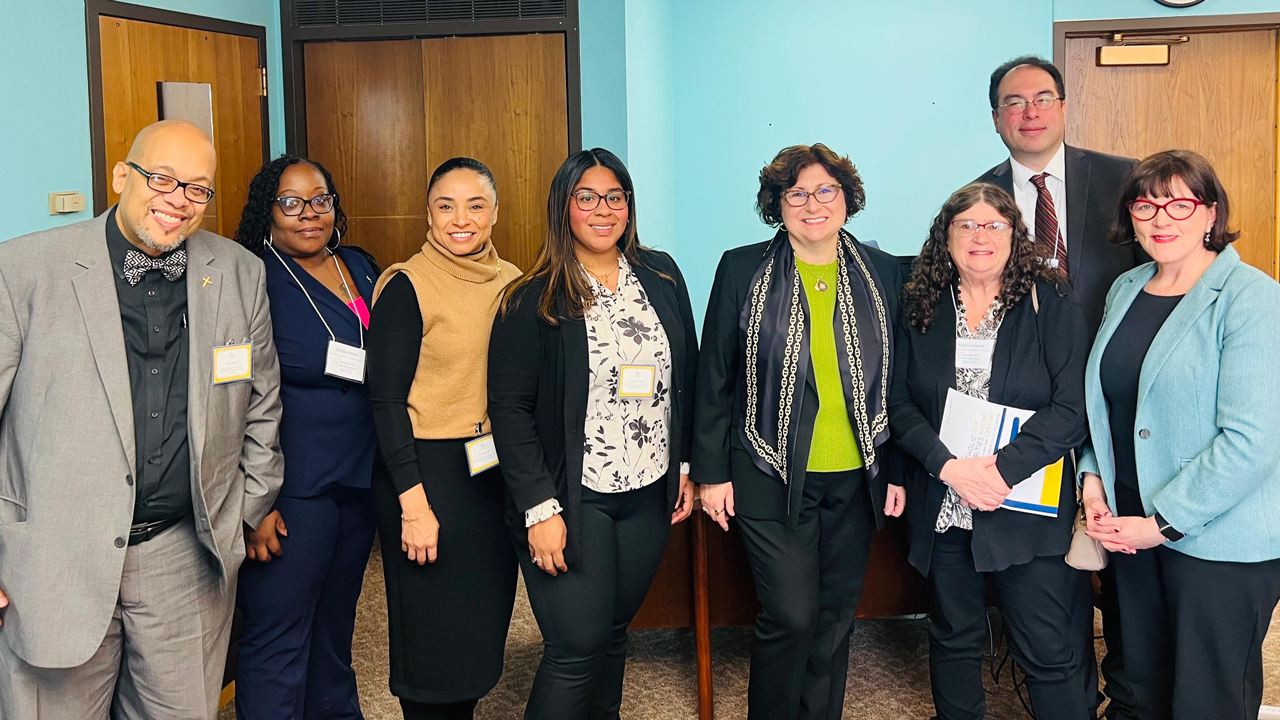
Catholic Charities of New York joined Catholic Charities agencies from across New York State in Albany for Advocacy Day, coming together to urge state leaders to advance policies that protect dignity, strengthen families, and support communities most in need.
Grounded in more than a century of service, Catholic Charities’ advocacy reflects what we see every day — families struggling with rising food costs, seniors facing housing instability, immigrants navigating complex legal systems, and human service workers striving to meet growing needs with limited resources. Advocacy Day provided an opportunity to lift up these realities and call for meaningful investment in solutions that work.
“Every day, our agencies witness the challenges facing New Yorkers — from families struggling to put food on the table to seniors worried about staying in their homes,” said J. Antonio Fernández, CEO of Catholic Charities of New York. “Our advocacy is rooted in the realities facing the people we serve and in our commitment to ensuring that public policies reflect dignity, compassion, and opportunity for all.”
Ending Hunger and Strengthening Food Security
Food advocacy remains central to Catholic Charities’ mission, recognizing that access to nutritious food is a human right and the foundation for stability and well-being. Today, 1.75 million households across New York State face food insecurity, placing immense strain on food pantries, soup kitchens, and community-based providers.
Last year alone, Catholic Charities agencies provided more than 10 million meals through food pantries, community kitchens, and home-delivered meal programs, while assisting thousands of individuals with SNAP enrollment.
Catholic Charities urges state leaders to:
• Establish $75 million baselines for the Hunger Prevention and Nutrition Assistance Program (HPNAP) and Nourish New York
• Increase funding for the Nutrition Outreach and Education Program (NOEP) to expand SNAP access
• Raise the SNAP minimum benefit to $100, helping nearly 110,000 households statewide
• Remove eligibility barriers by advancing a SNAP for All approach
• Support the Good Food NY Bill, promoting value-based food procurement
These investments are critical to ensuring all New Yorkers — especially vulnerable families — have access to culturally appropriate, nutritious food.
“Our teams are on the front lines every day, helping families stay housed, access food, and navigate complex systems during moments of crisis,” said Lisa Flores, CEO of Catholic Charities Community Services. “Strong state investment allows us to meet people where they are and respond with the stability and care New Yorkers deserve.”
Expanding Affordable and Supportive Housing
With more than 90,000 New Yorkers experiencing homelessness on any given day and countless others rent-burdened or at risk of eviction, housing stability remains an urgent priority.
Through our network of 82 affiliated agencies, Catholic Charities provides eviction prevention, rent assistance, emergency shelter, and supportive housing services to thousands of New Yorkers each year. Through our agency Catholic Homes New York, Catholic Charities has also helped develop and preserve more than 3,000 units of affordable housing for families and seniors across the Archdiocese.
Catholic Charities calls for:
• Passage of the Faith-Based Affordable Housing Act to unlock underutilized land for housing development
• Expansion of the Housing Access Voucher Pilot Program (HVAP)
• Increased funding for supportive housing, including adjustments to ESSHI contract rates
• Protections against insurance discrimination tied to housing vouchers
• Expanded SCRIE/DRIE/SCHE/DHE programs to help seniors and homeowners remain stably housed Stable housing is essential to preventing homelessness and ensuring long-term community health.
Strengthening the Human Services Workforce
Behind every program is a dedicated workforce. Catholic Charities emphasized the urgent need to invest in nonprofit human service workers, whose wages continue to lag behind comparable public-sector roles despite rising costs of living.
Catholic Charities calls for:
• A 2.7% Cost-of-Living Adjustment (COLA) for all state-contracted human services programs
• Inclusion of all nonprofit providers in COLA legislation
• Long-term investment in recruitment, retention, and wage parity
A stable, fairly compensated workforce is essential to sustaining services across New York State.
Supporting Individuals with Disabilities and Mental Health Needs
Catholic Charities also advocated for increased funding and protections for individuals with disabilities and mental health needs. More than one in four New York adults lives with a disability, and many face heightened risks of poverty, food insecurity, and housing instability.
Advocacy priorities include:
• Protecting Medicaid and Medicare from harmful cut
• Increasing funding for nonprofit disability service providers
• Advancing legislation to ensure fair wages and inclusion for workers with disabilities
Protecting Immigrants and Refugees
As one of New York’s largest providers of immigration legal services, Catholic Charities plays a vital role in supporting immigrants, refugees, and newcomers. Last year, we provided legal services to more than 8,400 immigrants and refugees, assisted over 79,000 hotline callers, and supported thousands more through employment services, English and citizenship courses, and “Know Your Rights” workshops.
Catholic Charities urges the Legislature to:
• Pass the Access to Representation Act, ensuring the right to legal counsel in immigration proceedings
• Maintain funding for Enhanced Services to Refugees (NYSESRP)
• Advance the NY for All Act
• Protect IOLA funding for civil legal aid
• Expand access to food and unemployment benefits for immigrants otherwise excluded
These protections help families remain together, safe, and economically stable.
Advocacy Rooted in Service
For Catholic Charities, advocacy is a natural extension of service. From food pantries and shelters to legal clinics and supportive housing, our policy priorities are shaped by what we see every day and grounded in compassion.
As budget negotiations continue, Catholic Charities remains committed to working alongside elected officials, partners, and fellow advocates to ensure policies reflect the dignity, resilience, and needs of New Yorkers across the state.
“At the heart of Catholic Charities’ work are people — parents doing their best for their children, seniors hoping to remain in their homes, and individuals seeking stability and dignity,” said Mr. Fernández. “Our advocacy is about standing with them, listening to their needs, and working together to ensure every New Yorker has the opportunity to thrive.”