


Education is central to the American promise. For generations, it has served as a primary engine of economic mobility, enabling individuals and communities to thrive even as the economy changes.
Yet America’s education system has faltered in recent years. Reading and math scores are near 25-year lows. Many school districts are facing budget cuts and layoffs. The Trump administration has exacerbated the problem, gutting the Education Department and slashing funding for universities.
Many Americans believe that education spending is inefficient, and they are right to be skeptical: In many states, spending per pupil has risen while achievement has declined. But smart investments in education still yield great returns, for families and for the nation.
The New York Times Communities Fund has identified charities with records of success in teaching children to read, helping them attend college and training adults for well-paying jobs, among other outcomes. For the first time, the Communities Fund has also partnered with an organization that focuses on the health of local journalism, which serves as a crucial source of information and promotes civic engagement.
We encourage readers to consider donating. More than $5 million of reader donations to these charities will be matched by generous Communities Fund partners.
Three partners focus on helping low-income children and teenagers learn.
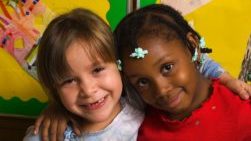
- Preschool can be prohibitively expensive for working families. In free New York preschools run by Children’s Aid, teachers prepare students for kindergarten by reading aloud to them and teaching the alphabet and numbers. At the end of last year, roughly 90 percent of children in these programs met or exceeded developmental benchmarks in language and mathematics.
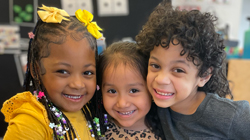
- Teachers often have to pay out of pocket for their classrooms’ books and materials. First Book provides free or inexpensive books to low-income schools and families. Its books make students more excited to read in class and at home.
- Only about half of low-income teens enroll in college, which often requires a labyrinth of applications and financial aid forms. OneGoal offers a high school class that helps students prepare for college and the work force. Eighty percent of OneGoal’s participants enroll in college or vocational school, and the program provides ongoing support to help students complete their degrees.
Three partners work with adults, teaching trades and placing graduates in well-paying jobs that are resilient to a changing economy.
- For low-income Americans, seeking government support can be an overwhelming and complex process. UJA-Federation of New York supports the Jack and Shirley Silver Hub in Queens, which provides a food pantry, legal aid and job-training programs, all in one welcoming building. The Hub’s vocational programs in construction, electrical work and nursing help graduates build successful careers in those fields.
- Many technology careers require technical skills but not a college degree. Per Scholas offers no-cost intensive tech training and connects graduates with jobs in fields such as cybersecurity and I.T. About 80 percent of Per Scholas graduates get a new job within a year of completing the program, and on average, graduates earn 2.5 times their income before training.
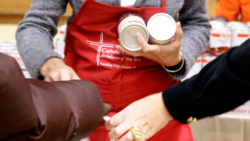
- There is a national shortage of health care workers, but training is often costly. It can also be challenging to complete for those without strong English skills. Catholic Charities of New York offers a free four-month program that includes intensive English classes, health care training and job placement. A vast majority of its graduates have been employed as home health aides, and the program will soon expand to offer other health care certifications.
The Communities Fund also seeks to strengthen global education and local journalism in the United States.
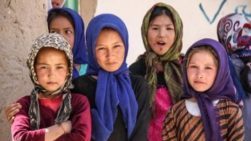
- In impoverished rural communities in Africa, fewer than 5 percent of girls complete high school. U.S. cuts to foreign aid haven’t helped. CAMFED helps make it possible for girls to attend school, paying for their fees, books and uniforms and providing mentorship. CAMFED graduates often become advocates for education in their communities, funding three more students, on average.
- Local newsrooms help their communities stay informed by reporting on City Halls, schools, police departments and new projects like housing developments and data centers. But local journalism has become scarce in too many communities. The American Journalism Project makes three-year investments in local newsrooms to help them grow sustainably. It has found that for every $1 donated, newsrooms increased their annual revenue by nearly $4. The grants also added more than 300 journalists to newsrooms.
No one should be priced out of the opportunity to learn or to share knowledge for the public good. The Communities Fund, with your support, aims to make the benefits of education available to all.
You can learn more about the beneficiary organizations and donate at nytcommunitiesfund.org. To donate by check, please make your check payable to The New York Times Communities Fund and send it to P.O. Box 5193, New York, N.Y. 10087.