


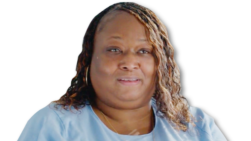
On September 11, 2001, Mary Ellen Ros, then Director of Parish and Community Services for Catholic Charities of New York, decided to drive into work.
“I missed my train by one minute, and decided to take my car in,” she says, “which ended up becoming a good decision because I was able to drive a lot of our Westchester colleagues home that day.”
That morning, terrorist attacks targeted the Twin Towers, causing mass destruction in downtown Manhattan, devastating countless families, and sending shockwaves of grief and fear throughout the country. The humanitarian relief effort needed would be massive, and Ros would have a key responsibility in leading it.
“One person came to us whose brother had been missing. It had been about eight weeks,” she recalls. “And while they were in the office, they got the notification that his remains were found.”
But for Ros, the relief effort was as much about helping people rebuild their financial independence as it was about helping them deal with immediate grief.
Facing a Financial Crisis
“The loss of life was at the forefront of everyone’s minds, and some agencies responded exclusively to those families who lost a loved one in the towers. But all around the city, there was economic damage,” says Ros. “People were out of work overnight. Literally, their jobs disappeared.”
In the wake of the attacks, authorities cordoned off the area south of Canal Street. “You had people who were not allowed to go to their workplaces. People couldn’t make ends meet, so even while they were reeling from the fear that pervaded everybody’s lives,” recalls Ros.
In the early days after 9/11, local labor unions sought out Monsignor Kevin Sullivan, then the incoming Executive Director of Catholic Charities of New York, to address the economic crisis.
“Within that first week, we created a special program where we sent workers over to the union hall and gave them economic relief to be able to pay their bills,” recalls Ros. “We helped them pay their utility bills, their rent bills—all with the idea of a long-term recovery plan.”
For people who worked in the Chinatown area, including the garment factory workers whose factories were shut down, regulatory issues became barriers to relief. Many nonprofits and government agencies would not provide economic aid to people who lived north of Canal Street. “These people live on very meager wages to begin with,” explains Ros.
Again, thanks to Monsignor Sullivan’s preexisting relationship with the Chinese Staff and Workers’ Association, Catholic Charities of New York could help where others couldn’t.
“Catholic Charities, as we always do, we kind of identify gaps in service and try to go in and serve those people,” explains Ros. “We developed that into a special program specifically for those Chinese workers. We didn’t have any Chinese-speaking staff, so it was a lot of coming up with responses on the fly in an unprecedented time.”
Taxi drivers, restaurant workers, and local vendors were also among the groups that needed specialized care, including those from other parts of the city, whose revenues had been hit hard by the decline in tourism and the shutdown of Downtown Manhattan.
“Somebody who shined shoes in front of the World Trade Center, who was reluctant to come for help because he felt like he didn’t deserve it, came in because the local pastor recommended he come to Catholic Charities. He began to tell the stories of all the people he would greet every day who are no longer there,” says Ros.
A New Coalition Builds an Historic New System
Catholic Charities of New York was also part of a consortium of 13 major nonprofits, the 9/11 United Services Group (USG), chaired by Monsignor Sullivan. Its primary function was to parcel out enormous sums of aid donations coming in from throughout the globe.
“People in need were going from agency to agency; we were in some ways retraumatizing them because they had to keep repeating the story of how they were affected and giving over documents,” remembers Ros of the days before the USG’s establishment.
“So we created a system where we offered to each person in need a sole point of contact and trained a cadre of over 100 service coordinators to be the single point-of-help for all services. We also had an 800 number for people to access, and we would assign them a case manager, and then that worker would help them get the services without having to go around cap in hand to every agency.”
The systems pioneered by Ros and her colleagues at the USG are now the basis of the Disaster Case Management systems used by FEMA and other major government agencies.
“This ‘data mart,’ or coordinated assistance network database, and the way that we approach help through service coordination, are both now the standard in disaster recovery today,” says Ros.
Moving Forward Through Service
Ros spent another 24 years with Catholic Charities of New York, bringing the same dedication she brought to 9/11 relief to serving New Yorkers in their most vulnerable moments — whether major disasters like COVID-19 or Hurricane Sandy, or perennial challenges like poverty or unemployment.
When thinking about what stays with her from the 9/11 era, she thinks about how her work leading the humanitarian effort provided perspective on her own trauma from the attack.
“To be able to be part of a response during a time that was terrifying and paralyzing, to be able to focus on helping someone else, was very healing for all of us,” she says.